Whether you're building a hunting operation or a breeding program, stocking your Texas ranch with exotic wildlife is one of the highest-ROI investments a landowner can make. Here's what you need to know before you buy.
Texas is home to more exotic wildlife than any other state in the nation — and for good reason. The Hill Country, South Texas brush, and East Texas timberlands offer ideal habitat for dozens of species from Africa, Asia, and Europe. If you're a landowner looking to diversify your operation, add a hunting income stream, or build a world-class breeding program, stocking exotic wildlife is one of the smartest moves you can make.
Start With Your Land, Not Your Wishlist
Before you buy a single animal, do an honest assessment of your property. Carrying capacity — the number of animals your land can sustainably support — is determined by acreage, water availability, native browse, and existing fencing. A 500-acre property in the Hill Country with good water and live oak coverage can comfortably carry 50–80 exotics depending on species mix. Overcrowding is the single biggest mistake new ranch owners make, and it leads to overgrazing, poor body condition, and disease pressure.
Key land assessment questions:
- —How many acres of quality browse and grazing do you have?
- —Do you have reliable water sources — ponds, tanks, or water lines — distributed across the property?
- —Is your perimeter fence high-fence (8 feet minimum) or low-fence? Most exotics require high fence.
- —What predator pressure exists on your property? Coyotes, mountain lions, and bobcats all impact exotic survival rates.
- —What is your primary goal — hunting, breeding, or both?
Choosing the Right Species for Your Operation
Not all exotics are created equal when it comes to ranch suitability, hunting value, and market demand. Here's a quick breakdown of the most popular species for Texas ranches:
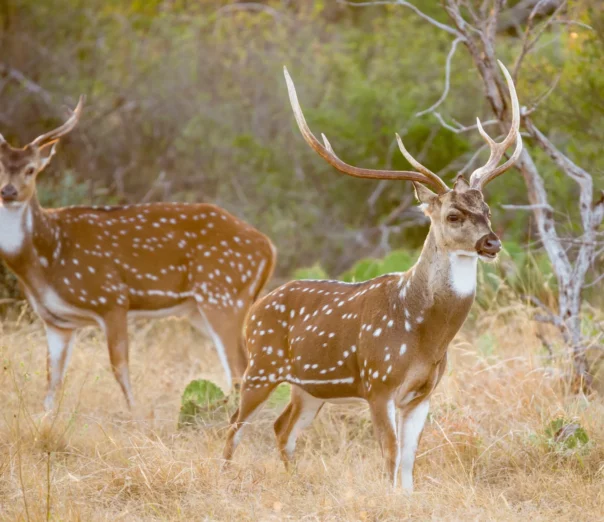
Axis Deer (Cervus axis)
The most popular exotic in Texas by a wide margin. Axis deer are adaptable, breed year-round (unlike whitetail), and produce exceptional venison. Trophy bucks are in high demand for hunting operations, and breeding does hold strong value at auction. They thrive in Hill Country and South Texas environments.
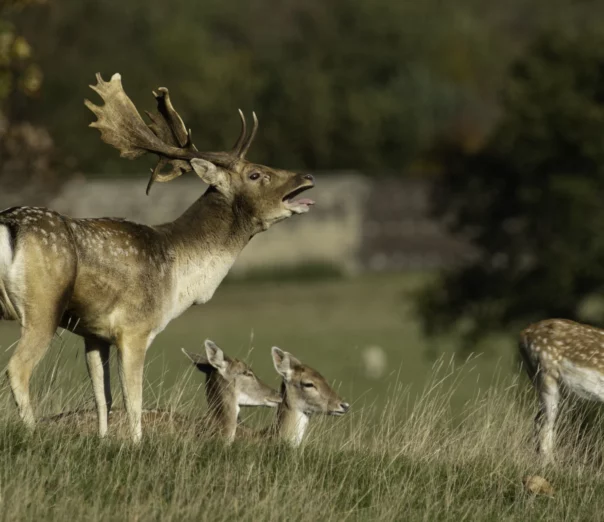
Fallow Deer (Dama dama)
Fallow deer come in four color phases — common, menil, black, and white — making them visually striking and popular with hunting operations that want variety. They're browsers by nature, which means they put less pressure on native grasses than grazers. Fallow are excellent for smaller properties.
Blackbuck Antelope (Antilope cervicapra)
One of the fastest animals in the world and among the most visually stunning. Blackbuck are a favorite for hunting operations and breed reliably in Texas conditions. Trophy males with tight spiral horns command premium hunt fees.
Pro Tip: A mixed-species approach — combining deer, antelope, and one or two African species — maximizes both hunting revenue and year-round visual appeal for ranch guests and potential buyers.
Sourcing Your Animals: Why Auction Matters
The quality of your foundation stock determines the ceiling of your entire operation. Buying at a reputable live exotic auction — like the Huntsville Exotic Sales hosted at Ace Outfitters — gives you access to health-tested, documented animals from established breeding programs across Texas. You can inspect animals in person, compare bloodlines, and buy with confidence knowing the animals are acclimatized to Texas conditions.
Avoid buying exotics from unknown sources without health documentation. Diseases like Johne's disease, bovine tuberculosis, and brucellosis can devastate a herd and create serious legal liability. Always request a Certificate of Veterinary Inspection (CVI) and ask about the seller's vaccination and testing protocols.
Fencing, Water, and Infrastructure
High-fence is non-negotiable for most exotic species. A minimum 8-foot perimeter fence with a 2-foot outward lean at the top will contain most deer and antelope species. For larger African species like Eland or Kudu, 10-foot fence with additional reinforcement at corners and gates is recommended.
Water distribution is equally critical. Exotics should never have to travel more than half a mile to water. Install automatic waterers or maintain natural water sources throughout the property, and check them weekly during summer months when evaporation is high.
Ready to start stocking? Browse our upcoming Huntsville Exotic Sales to see what's available, or contact us directly to discuss private treaty purchases and ranch consulting services.
Tags