When it's time to move, treat, or relocate exotic wildlife on your ranch, you have two primary capture options. Here's how to choose between helicopter capture and ground darting based on your species, terrain, and goals.
At some point in every exotic ranch operation, you'll need to capture animals — for veterinary treatment, relocation, sale preparation, or population management. The method you choose has significant implications for animal welfare, operational efficiency, and cost. The two primary options are helicopter capture (aerial net-gunning or darting) and ground darting (chemical immobilization from a vehicle or on foot).
Neither method is universally superior. The right choice depends on your specific situation — species, terrain, herd size, urgency, and budget all factor into the decision.
Helicopter Capture: Speed, Scale, and Precision
Helicopter capture involves using a low-flying helicopter to herd, net-gun, or aerially dart target animals. It's the preferred method for large-scale captures, difficult terrain, and species that are notoriously hard to approach on the ground.
When helicopter capture is the right choice:
- —Large herds — capturing 20+ animals in a single operation
- —Rugged or heavily wooded terrain where ground vehicles can't access
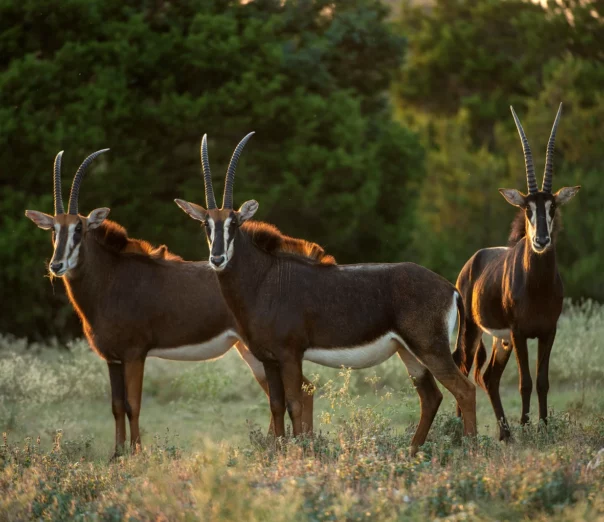
- —Species with high flight response — Gemsbok, Sable, Eland, and Kudu are extremely difficult to dart from the ground
- —Time-sensitive situations — disease outbreak, injury, or emergency relocation
- —When you need to select specific individuals from a mixed herd
The primary advantage of helicopter capture is speed and selectivity. An experienced helicopter crew can capture dozens of animals in a single day that would take weeks to dart from the ground. The crew can also identify and target specific animals — a particular trophy bull, a limping doe, or a specific age class — with precision that ground darting can't match.
Ace Outfitters operates a dedicated helicopter capture program throughout Texas. Our crew has captured thousands of exotic animals across dozens of species with an exceptional safety record.
Ground Darting: Precision for Smaller Operations
Ground darting involves approaching target animals in a vehicle or on foot and administering a chemical immobilization dart from a dart gun. It's less expensive per animal than helicopter capture and is well-suited to smaller operations with good road access and habituated animals.
When ground darting is the right choice:
- —Single animals or small groups (1–5 animals)
- —Animals that are habituated to vehicles and can be approached within 30–50 yards
- —Flat, open terrain with good road access
- —Non-urgent situations where you have time to set up and wait
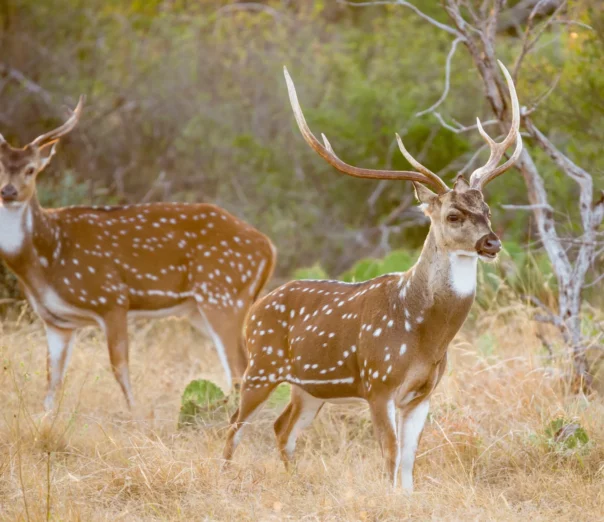
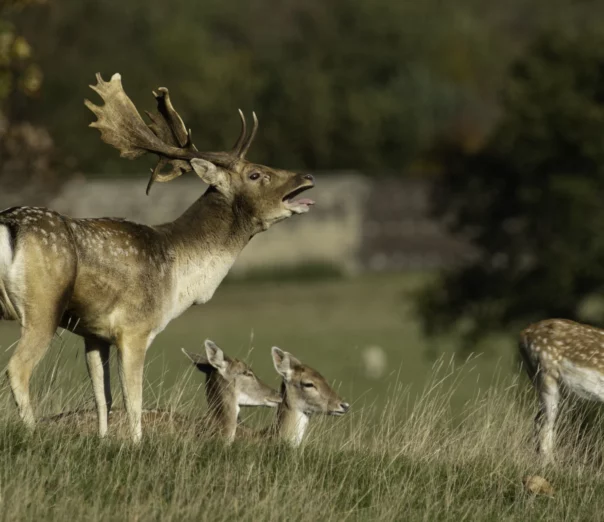
- —Species with lower flight response — Axis deer and Fallow deer are generally more approachable
The main limitation of ground darting is that it requires the animal to be approachable. Wild-caught or recently transported exotics, animals in heavy cover, and flighty species like Gemsbok or Sable are extremely difficult to dart from the ground without causing dangerous chase stress.
The Critical Factor: Capture Myopathy
Capture myopathy is a stress-induced muscle condition that can be fatal in deer and antelope. It's caused by extreme exertion during capture — long chases, prolonged struggling, or high body temperature. Both capture methods carry some risk of capture myopathy, but the risk is significantly higher with poorly executed ground darting that involves extended chases.
Experienced helicopter crews minimize this risk by making captures fast and decisive — the animal is netted or darted within seconds of the helicopter approach, minimizing chase distance and duration. Ground darting operations that result in long chases or multiple missed darts dramatically increase capture myopathy risk.
Cost Comparison
Helicopter capture has a higher upfront cost due to aircraft and crew expenses, but the cost-per-animal drops significantly with larger captures. For operations capturing 15+ animals, helicopter capture is often more cost-effective than ground darting when you factor in the time and labor involved in ground operations.
For single-animal captures or small groups on accessible terrain, ground darting is typically more economical. The key is matching the method to the situation rather than defaulting to one approach for all scenarios.
Not sure which method is right for your situation? Contact Ace Outfitters for a consultation. We'll assess your property, species, and goals and recommend the most effective and humane capture approach.
Tags