It may seem counterintuitive, but hunting on private Texas ranches has played a critical role in saving several African species from extinction. Here's the science and economics behind conservation hunting.
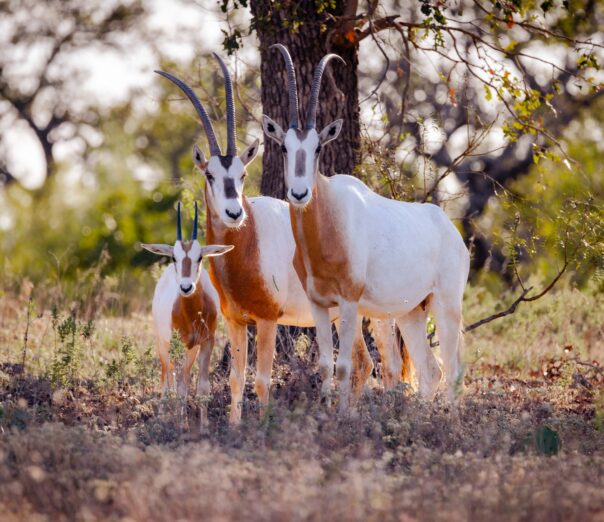
In 1996, the Scimitar-Horned Oryx was declared extinct in the wild. Its native range across the Sahara and Sahel regions of North Africa had been devastated by drought, habitat loss, and unregulated hunting. By the early 2000s, fewer than 500 animals existed in the world — and most of them were on private ranches in Texas.
Today, thanks largely to Texas ranchers and the economic engine of conservation hunting, the Scimitar-Horned Oryx population has rebounded to over 10,000 animals, and a successful reintroduction program has established a free-ranging population in Chad. This story is one of the most remarkable conservation successes of the 21st century — and it happened because ranchers had a financial incentive to breed and protect the species.
The Economics of Conservation
Conservation is expensive. Maintaining a breeding herd of Scimitar-Horned Oryx requires land, water, veterinary care, feed supplementation, and skilled management. Without a revenue stream, most private landowners couldn't sustain these programs long-term.
Conservation hunting provides that revenue stream. A single trophy hunt for a mature Scimitar-Horned Oryx bull generates $4,000–$8,000 in direct revenue for the ranch. That revenue funds the breeding program, pays for veterinary care, and incentivizes the rancher to maintain and expand the herd rather than convert the land to other uses.
The data is clear: in every documented case where conservation hunting has been implemented for endangered species on private land, population numbers have increased. The economic incentive to breed and protect the animals is more powerful than any regulatory protection alone.
The Three Species That Texas Saved
Three species of African antelope — the Scimitar-Horned Oryx, the Addax, and the Dama Gazelle — were all functionally extinct in the wild by the early 2000s. All three survived primarily because of private breeding programs on Texas ranches.
Scimitar-Horned Oryx (Oryx dammah)
The success story of the century. Texas ranches maintained the global captive population through the 1990s and 2000s, and the Sahara Conservation Fund used Texas-bred animals for the Chad reintroduction program. The wild population in Chad now numbers in the hundreds and is growing.
Addax (Addax nasomaculatus)
The Addax is critically endangered in the wild with fewer than 100 animals estimated in Niger and Chad. The global captive population — most of it on Texas ranches — numbers in the thousands. Texas ranchers are currently the primary insurance policy against this species' extinction.
Dama Gazelle (Nanger dama)
Fewer than 100 Dama Gazelle survive in the wild. Texas ranches hold the majority of the world's captive population and are actively participating in breeding programs coordinated with the Species Survival Plan (SSP) managed by the Association of Zoos and Aquariums.
The Regulatory Debate
In 2012, the U.S. Fish and Wildlife Service listed all three species under the Endangered Species Act, which initially required ranchers to obtain permits before conducting hunts. The resulting permit burden caused a significant drop in breeding activity — ranchers reduced herd sizes because the cost and complexity of compliance made breeding programs economically unviable.
After legal challenges and extensive lobbying by the hunting and ranching community, the regulations were modified to reduce the permit burden. The episode illustrated a fundamental tension in conservation policy: regulations designed to protect species can inadvertently harm them by removing the economic incentives that sustain private breeding programs.
What This Means for Texas Ranch Owners
If you're considering adding Scimitar-Horned Oryx, Addax, or other rare African species to your ranch, you're participating in something genuinely important. These animals exist in viable numbers today because Texas ranchers made the decision to breed and protect them. The hunting revenue that makes those programs sustainable is not in conflict with conservation — it is conservation.
Ace Outfitters regularly handles Scimitar-Horned Oryx and other rare African species at the Huntsville Exotic Sales. Contact us to learn about current availability and to discuss adding rare species to your breeding program.
Tags